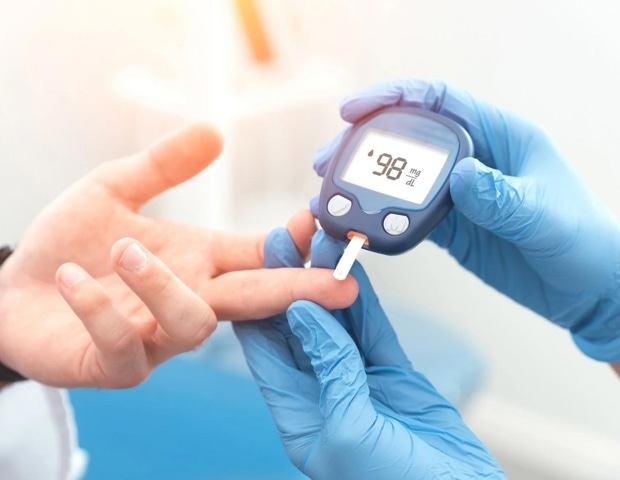
Study Links Diabetes Distress to Blood Sugar Levels in Teens, With a Clear Target for Intervention

Share
A multi‑year study involving University of Miami Miller School of Medicine researchers shows that diabetes‑related emotional distress interferes with teens’ self‑management, driving higher blood sugar levels and revealing a clear target for intervention.

University of Miami Miller School of Medicine Mailman Center for Child Development researchers are part of a multi‑institutional team that has identified a key pathway linking emotional distress to blood sugar levels in adolescents with type 1 diabetes.
Importantly, the research revealed a modifiable factor clinicians can target to improve outcomes.
The study, published in the Journal of Pediatric Psychology, shows that diabetes self‑management behaviors mediate the relationship between diabetes‑related emotional distress and glycemic levels in teens. In other words, higher emotional distress is associated with higher blood sugar levels largely because it interferes with daily diabetes management tasks such as monitoring glucose levels, administering insulin and managing diet and exercise.
“The big message from this study is that diabetes distress is very common and it’s a very meaningful factor to consider for the health care teams that are taking care of these kids,” said Alan Delamater, Ph.D., professor of pediatrics at the Miller School and psychology at the University of Miami. “Mid- to late adolescence is a very important time in diabetes management because it’s typically the time when kids are on their own and it’s also the peak time of suboptimal glycemic control.”


In addition to Dr. Delamater, Mailman Center senior authors include Janine Sanchez, M.D., professor of clinical pediatrics at the Miller School, and Luiza Mali, Ph.D., assistant professor of clinical pediatrics at the Miller School.
“This study will help improve diabetes management for adolescents with type 1 diabetes,” said Dr. Sanchez.
Why Diabetes Distress is a Critical Issue for Adolescents
Diabetes distress refers to the emotional burden of living with and managing diabetes, which is a chronic condition. Adolescents are already navigating puberty, with rising social pressures. Managing type 1 diabetes can be especially challenging. Prior research has shown that diabetes distress is common in teens and linked to undesirable glycemic levels, but how distress translates into higher blood sugar levels has remained unclear.
“Suboptimal management increases risk for all kinds of bad health complications down the road,” Dr. Delamater said. “Distress leads to suboptimal self‑care behavior, which in turn leads to glycemic control that’s suboptimal.”
This study helps clarify the mechanism, showing that self‑management behaviors are the critical link between emotional distress and long‑term blood sugar levels.
Inside the Three‑Year Study of Teens with Type 1 Diabetes
The researchers followed 172 adolescents with type 1 diabetes and their caregivers over three years as part of a longitudinal, multisite study conducted at three U.S. academic medical centers.
At four time points — baseline, 12, 24 and 36 months — participants completed validated questionnaires measuring:
• Diabetes distress, using the Problem Areas in Diabetes–Teen (PAID‑T) scale
• Diabetes self‑management behaviors, reported by both adolescents and caregivers
• Glycemic levels measured by HbA1c from blood samples analyzed in a central laboratory
Using advanced statistical modeling, the team tested whether self‑management behaviors mediated the relationship between distress and HbA1c both cross‑sectionally and over time.
What the Researchers Found About Blood Sugar and Behavior
Across multiple time points, higher diabetes distress was associated with lower self‑management, which in turn led to higher HbA1c levels. When these factors were analyzed together, adolescent‑reported self‑management behaviors repeatedly emerged as the mediator linking distress to glycemic outcomes.
• Adolescent‑reported self‑management mediated the distress–HbA1c relationship at baseline, 12 month and 36 months
• Caregiver‑reported self‑management mediated this relationship only at baseline
• Girls consistently reported higher levels of diabetes distress than boys, though self‑management behaviors did not differ by sex
These findings suggest that as adolescents mature, their own perceptions and behaviors become more predictive of health outcomes than caregiver observations.

Why Teens’ Own Self‑Management Matters More
One of the study’s most important insights is that teen‑reported self‑management was a more reliable predictor over time than caregiver report. As adolescents gain autonomy, caregivers may have less visibility into daily diabetes tasks. Teens’ own engagement, or disengagement, plays a growing role in outcomes.
This distinction has practical implications for both clinical care and research design, underscoring the importance of directly assessing adolescents’ experiences, behaviors and emotional well‑being rather than relying solely on proxy reporting.
Implications for Patient Care
The findings point to self‑management behaviors as a significant, modifiable intervention target for adolescents experiencing diabetes distress.
Rather than treating distress and glycemic levels as separate problems, the study supports integrated care approaches that:
• Screen routinely for diabetes distress
• Provide behavioral and psychological support alongside medical management
• Strengthen practical self‑management skills during adolescence
Interventions that reduce distress while reinforcing daily management — including cognitive‑behavioral strategies, problem‑solving skills and digital self‑management tools — may offer the greatest benefit.
“When we determine that kids are distressed, we need to provide interventions that support that kid,” Dr. Delamater said. “One is to help them feel less distressed about the chronicity, about the demands, about everything else. Another is to help them engage in self‑management behaviors that are effective in the presence of distress.”
By clarifying how emotional distress translates into physiological outcomes, this study adds critical evidence to support behaviorally informed, developmentally sensitive diabetes care.
More from the Mailman Center
Tags: Department of Pediatrics, Department of Psychology, diabetes, Dr. Alan Delamater, Dr. Janine Sanchez, Dr. Luiza Vianna Mali, Mailman Center for Child Development, Newsroom, pediatrics, type 1 diabetes
link